The Truths We Bury
Every nation tells stories about itself. What it chooses to celebrate is revealing. What it chooses to bury is defining.
Traveling slowly across America, I’ve learned that some of our most important truths live in landscapes that ask for silence before they allow interpretation. And across the country, museums and memorials bear witness to our past. All should be mandatory parts of our education. These are not marginal stories. They are foundational.
The histories of Indigenous peoples and African Americans are not side chapters in the American story. They are the story. And yet, they are too often compressed, softened, or erased entirely.
So too are the struggles of other marginalized communities—immigrants, refugees, and the working poor, whose contributions and pain are often left in the footnotes. It’s something I wrestled with in writing No Irish Need Apply, where legacy, belonging, and erasure collided in unexpected ways.
These histories are about clarity. If America is to be understood honestly, it must be seen whole; not as a myth of inevitable progress, but as a nation shaped by contradiction, violence, resilience, and unfinished reckoning.
As I traveled, I kept asking myself: Did I ever truly learn these histories, or just fragments, filtered through textbooks written from a white perspective? Wounded Knee. Trail of Tears. The transatlantic slave trade. All were a part of the curriculum. But what voices had I heard? What context was I missing? And what had I forgotten?
And that raised its own question about me—was that ignorance, or complicity?
Before America Had a Name
Long before the United States existed, thousands of distinct Indigenous nations lived on this land. They had complex systems of governance, trade networks, languages, art, and spiritual traditions deeply tied to place. These were not primitive societies waiting to be discovered. They were vibrant, sovereign civilizations with histories older than the country that exists today. What strikes me most is not just what happened, but how effectively we’ve learned to look away. Indigenous peoples are not a preface to America. They are America.
For nearly a century, the United States federal government signed an estimated 350-400 treaties with Indigenous nations, agreements intended to recognize sovereignty, peace, and land rights. Most were later violated, ignored, or rewritten to dispossess tribes of their lands and resources. The Trail of Tears. The Wounded Knee Massacre. These were not isolated acts of cruelty. They were part of the founding mechanics of American expansion. We are taught an incomplete story, and I don’t know nearly enough about the treatment of Indigenous Peoples.
But traveling through the Great Plains—North Dakota, South Dakota, Nebraska, Oklahoma, Texas—the scale of what was taken becomes harder to ignore. Land was seized. Children were removed. Languages were banned. Spiritual practices were outlawed. Cultural continuity was shattered. Entire histories were reframed, obscured, or erased from the story we tell ourselves about this country.
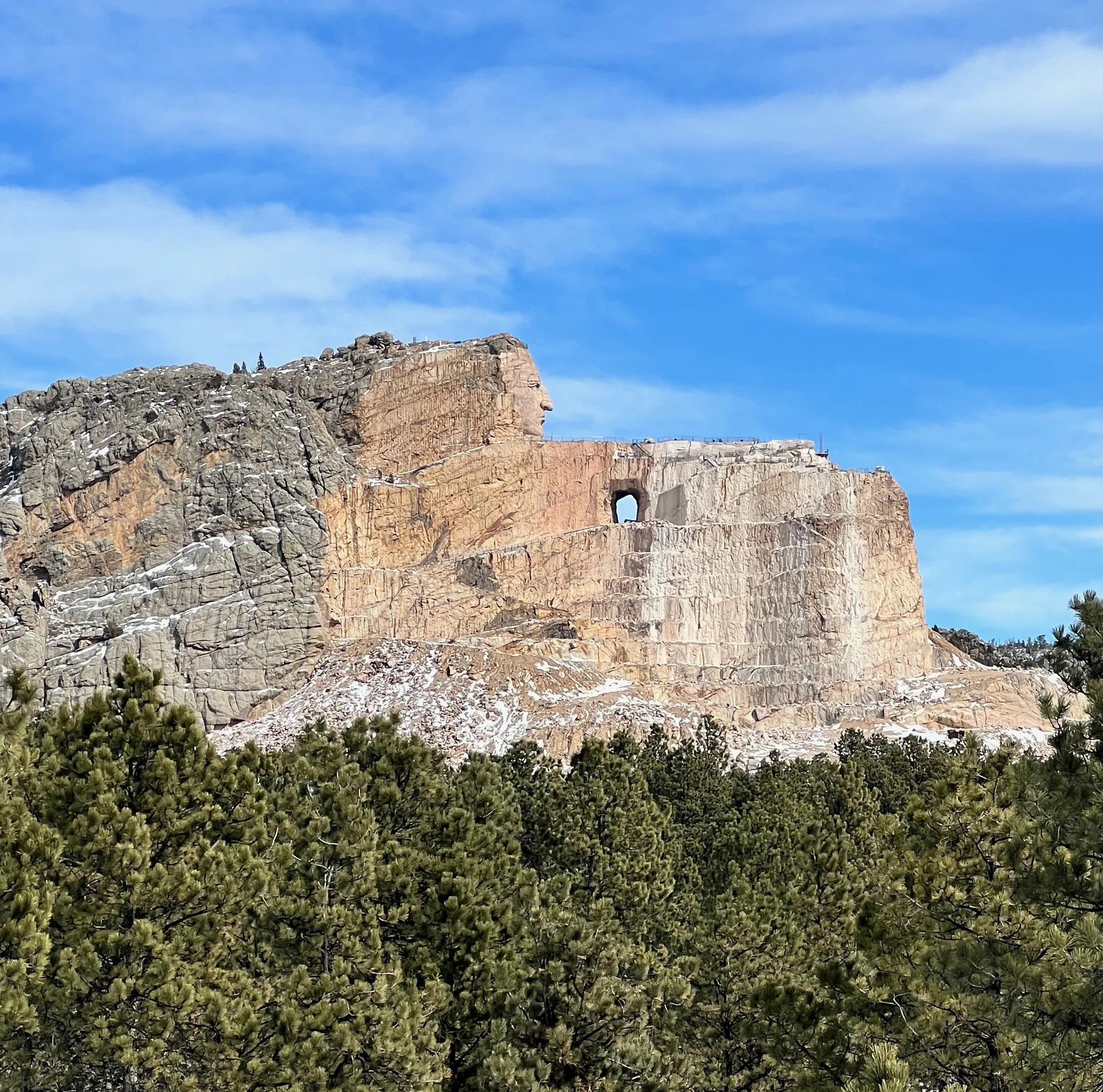
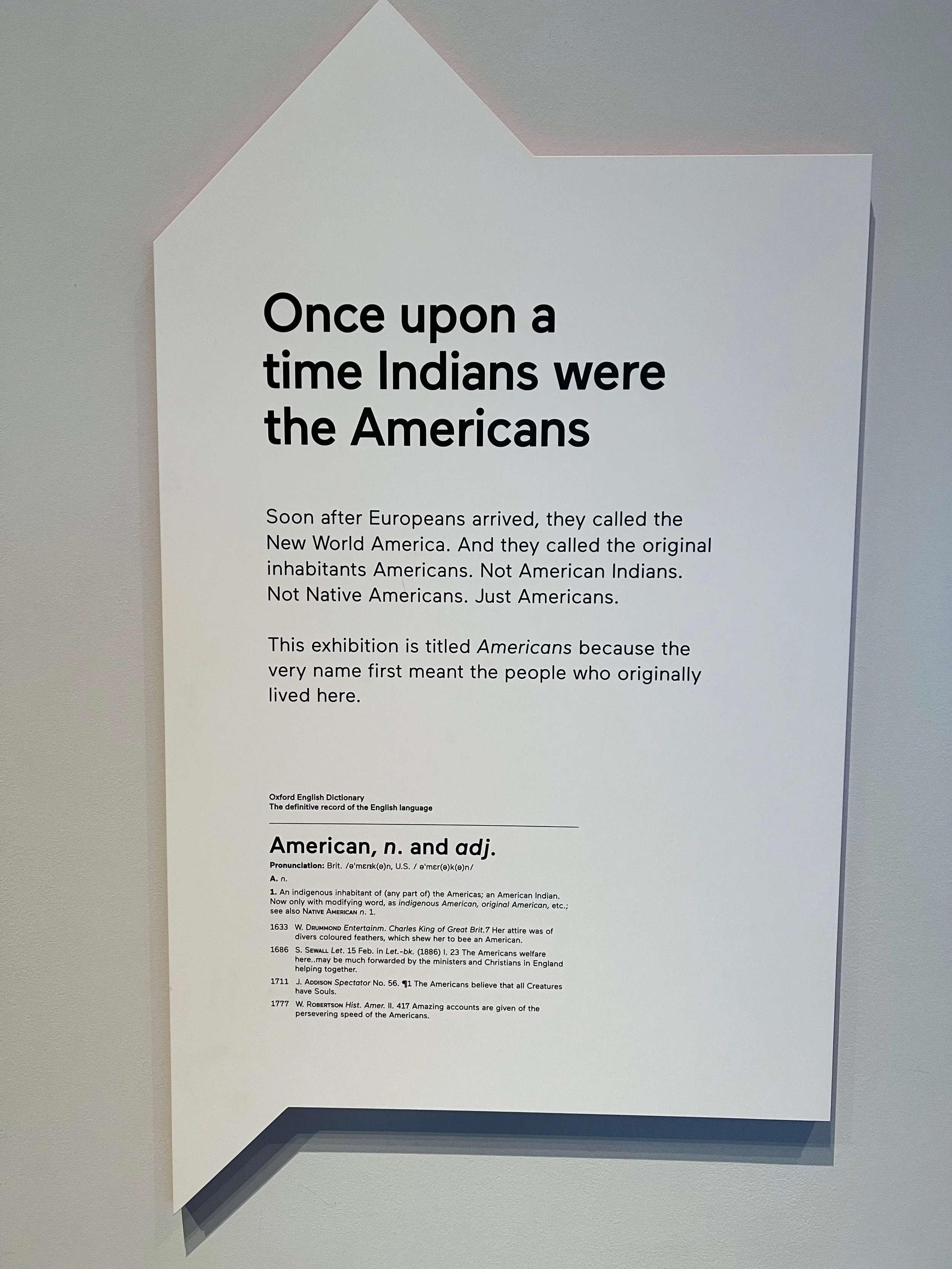
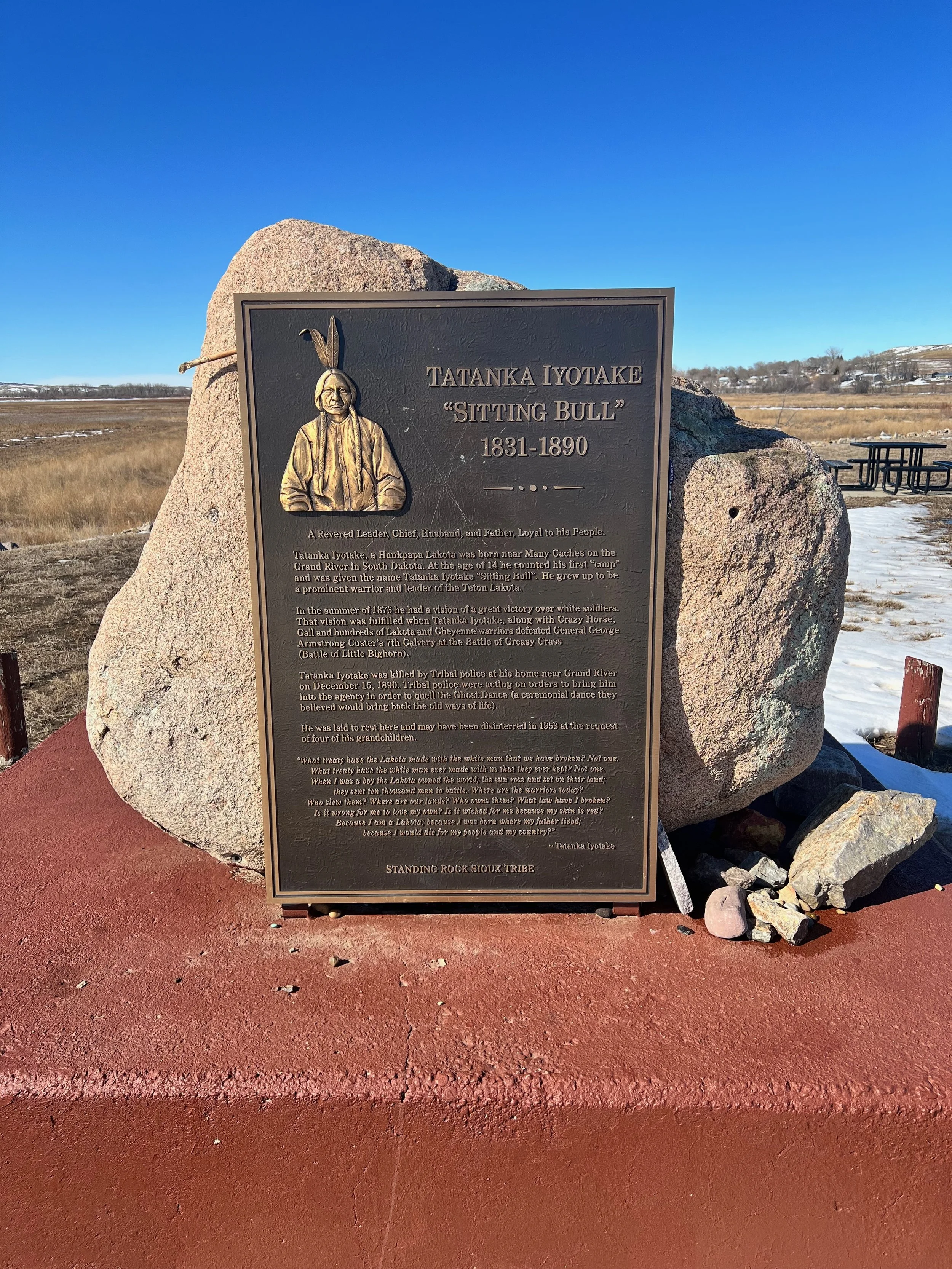
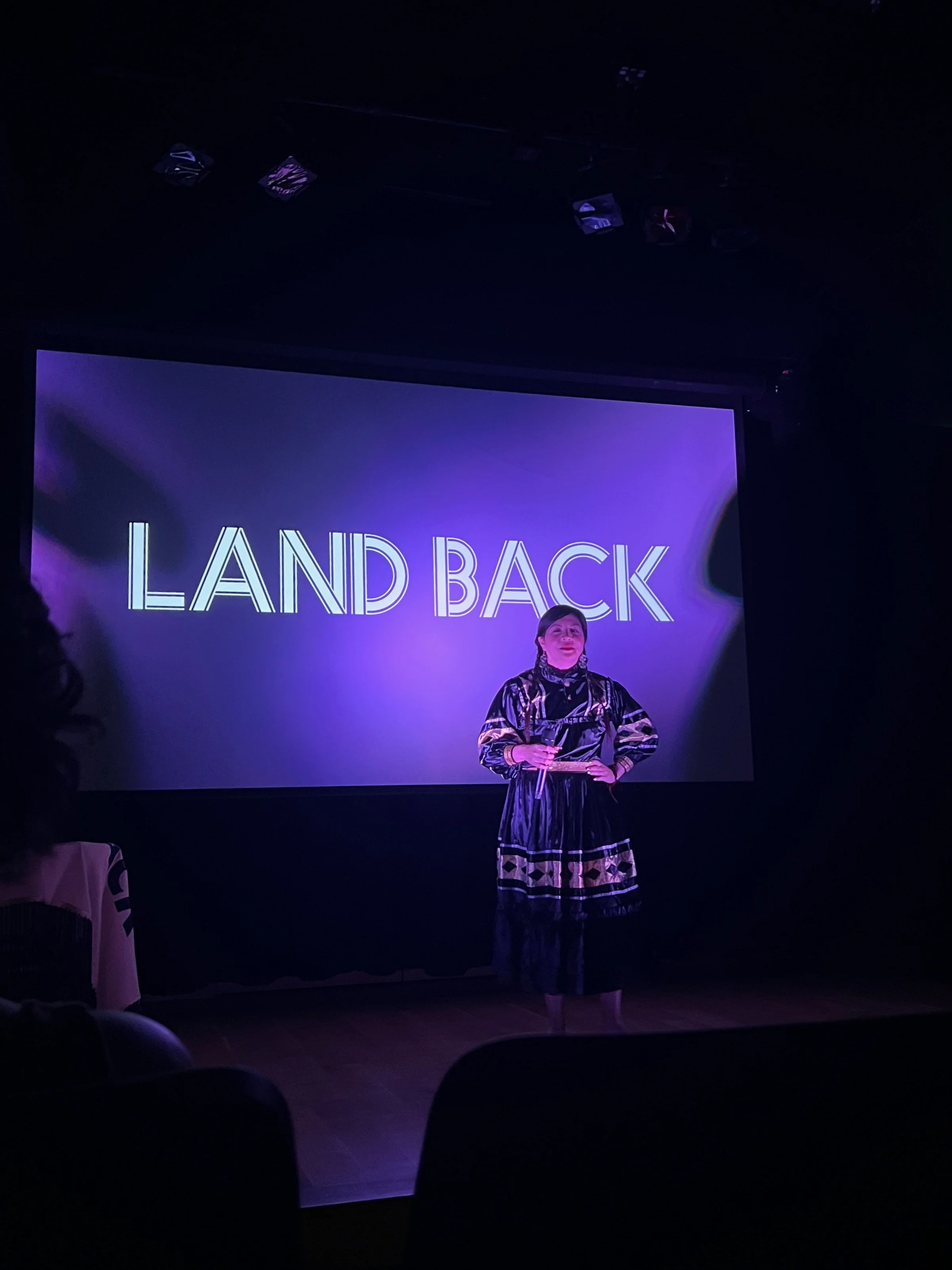
To stand at the base of the Crazy Horse Memorial, or at Sitting Bull’s original burial site in the Standing Rock Reservation, is to feel the weight of history. And I listened to artist Elisa Harkins speak about Land Back and the spiritual connection between Indigenous peoples and land. This was not land to be owned. It was home, ancestor, and relative. And I found myself asking: Have I ever felt that connected to a place? To a town? To a community? Have I ever belonged somewhere so completely that its soil could feel sacred?
-
![]()
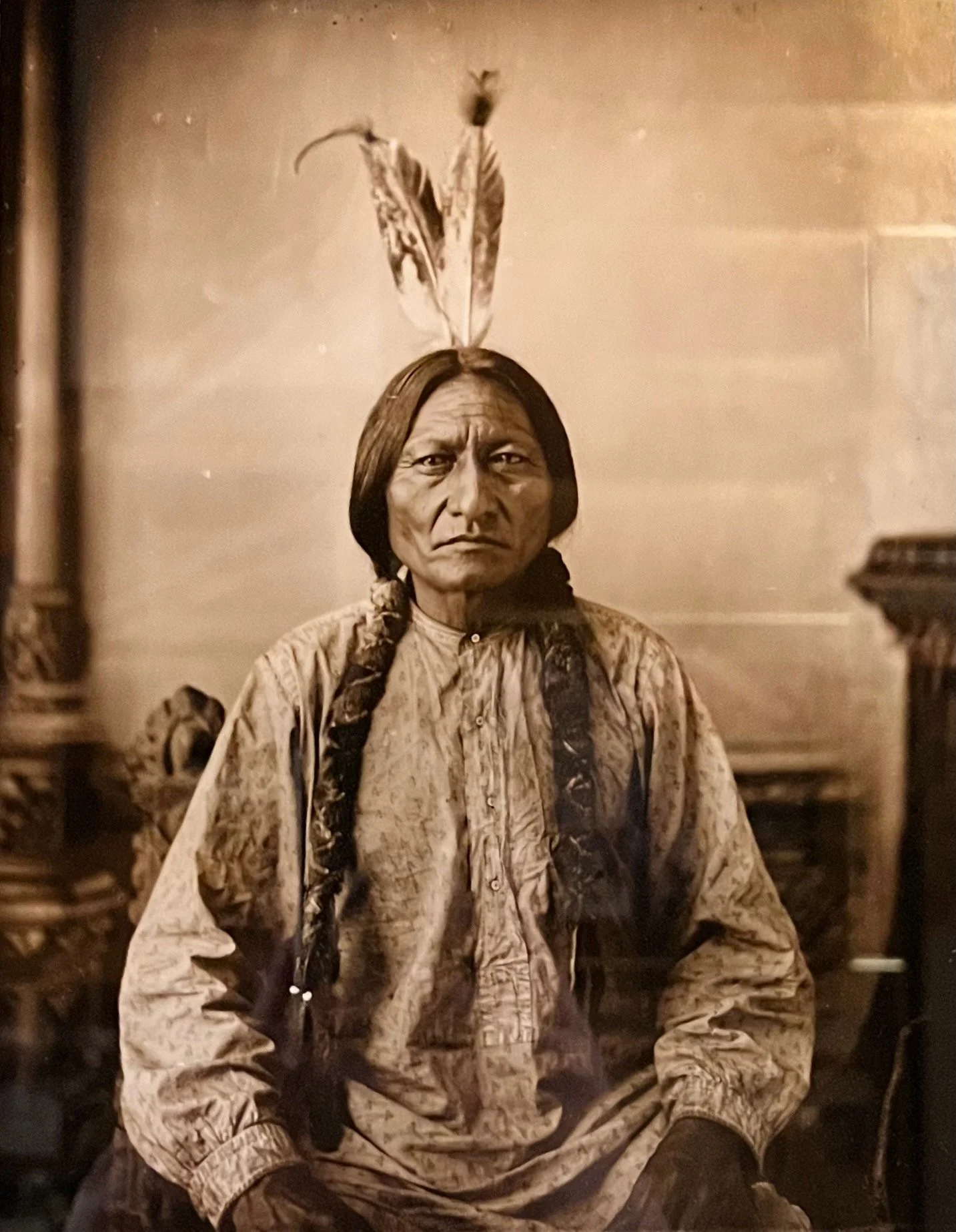
Sitting Bull Portrait, Wall Drug Store, Wall, South Dakota
-
![]()
Crazy Horse Memorial, Crazy Horse, South Dakota
-
![]()
National Museum of the American Indian, Washington, D.C.
-
![]()
Sitting Bull Original Burial Site, Fort Yates, North Dakota
-
![]()
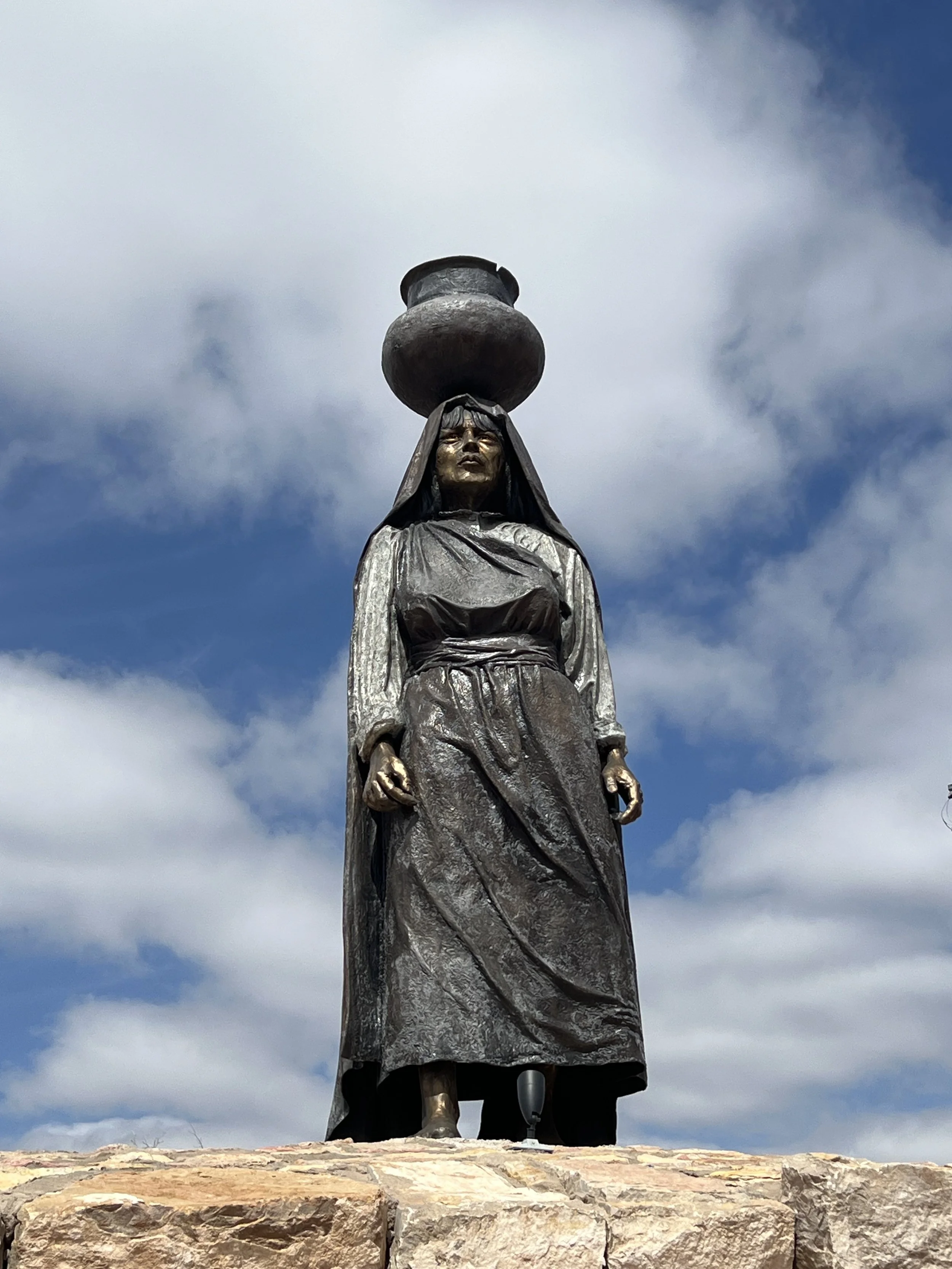
Nestora Granillo Piarote Statue, Ysleta del Sur Pueblo Center, El Paso, Texas
-
![]()
Elisa Harkins, Indigenous Language Poetry Night, Woody Guthrie Center, Tulsa, Oklahoma
Built, Exploited, Erased
Slavery is often described as a tragic chapter that America eventually overcame. That framing is convenient. It suggests closure.
But slavery wasn’t a chapter. It was the system. Economically foundational. Politically protected. Socially enforced. The violence did not end with emancipation. It adapted. Through Jim Crow. Through redlining. Through mass incarceration. Through quiet policies with loud consequences. To tell the American story without centering this truth is to tell a lie of omission.
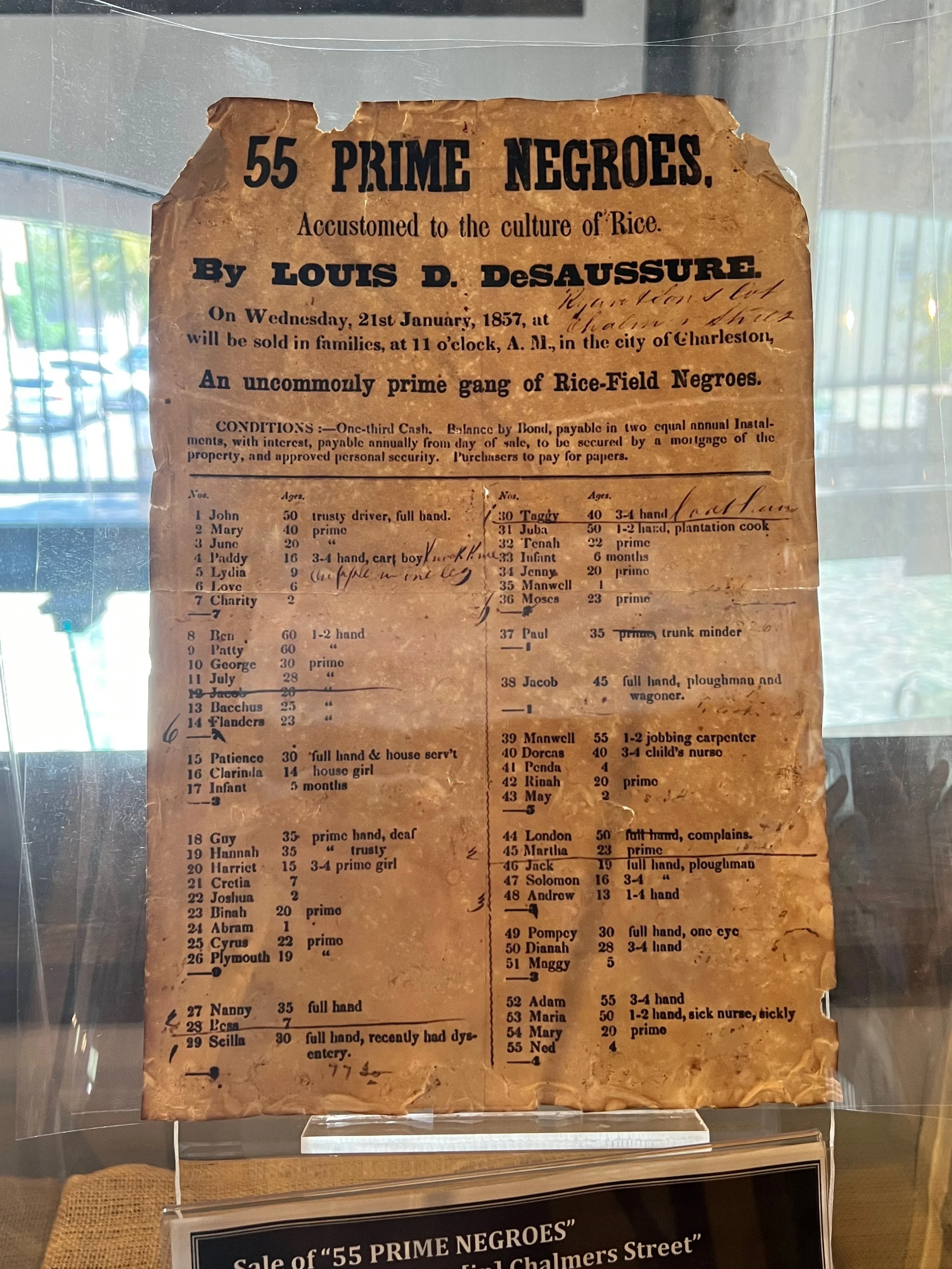
To stand within the Old Slave Mart in Charleston is to feel the air thicken. The stories etched into that space aren’t just historical—they’re haunting. You feel the chill of lives auctioned, of families torn apart, of humanity reduced to inventory. You don’t just leave with facts. You leave with echoes.
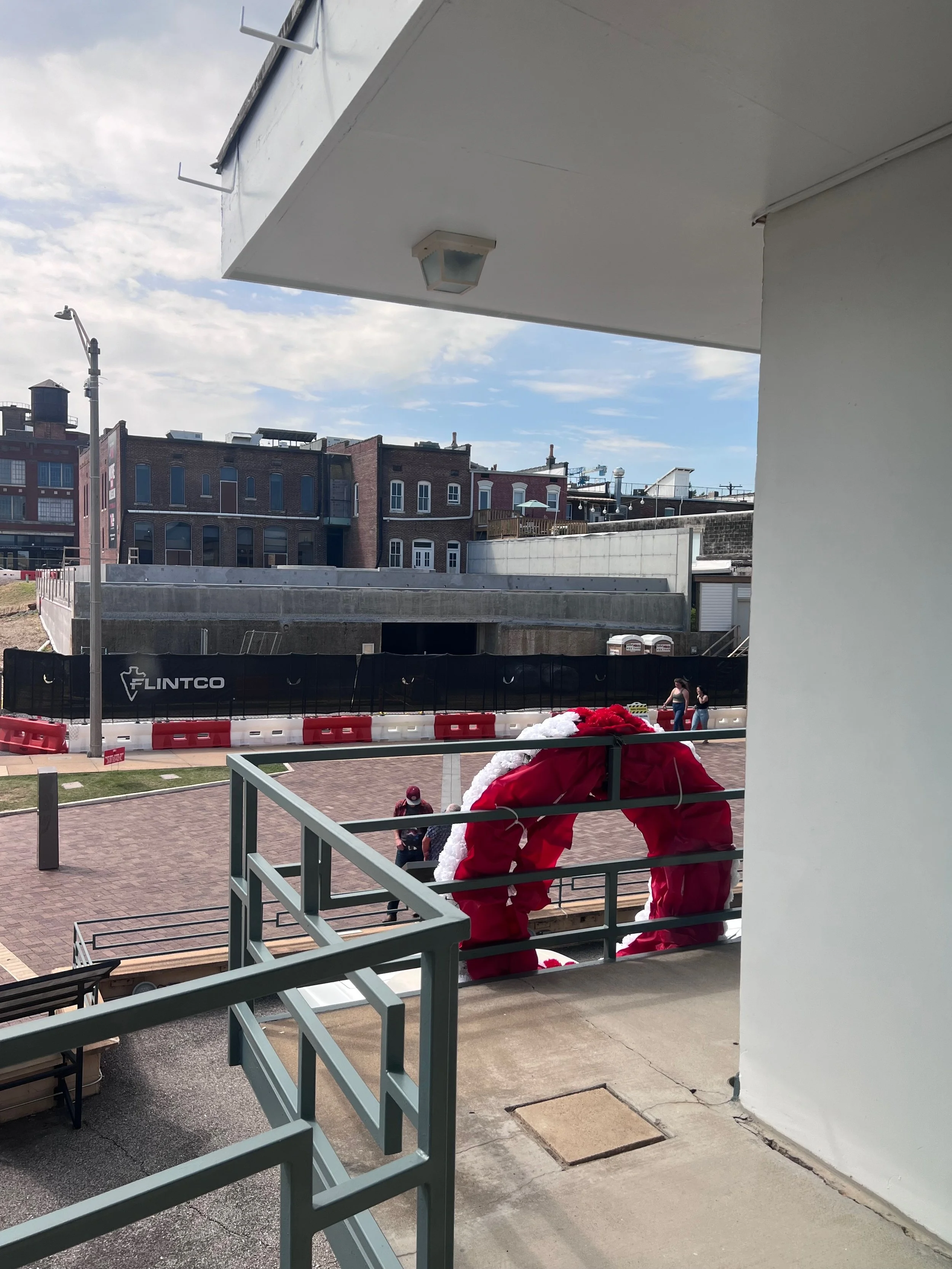
To look through the window of the Lorraine Motel, just feet from where Dr. King was assassinated, is to feel a nation fracture in real time. A silence settles when you stand there—heavy and unresolved. You realize how close hope is always to heartbreak.
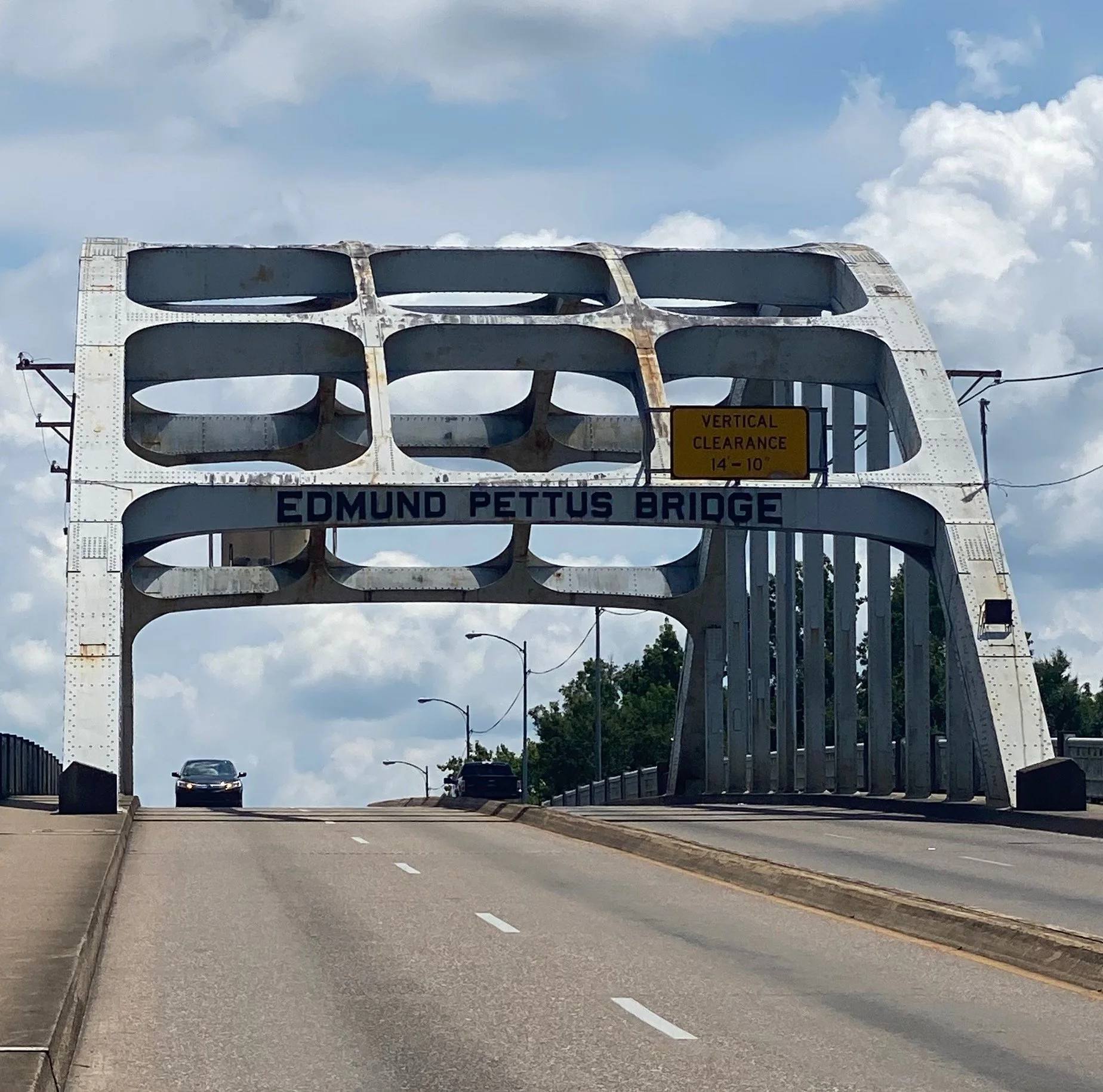
And to walk across the Edmund Pettus Bridge in Selma, you don’t just trace history. You carry it. Each step summons the courage of those who marched into violence for the simple right to be counted. I found myself wondering: Have I ever had that kind of courage? That kind of conviction? Would I have joined the march?
-
![]()
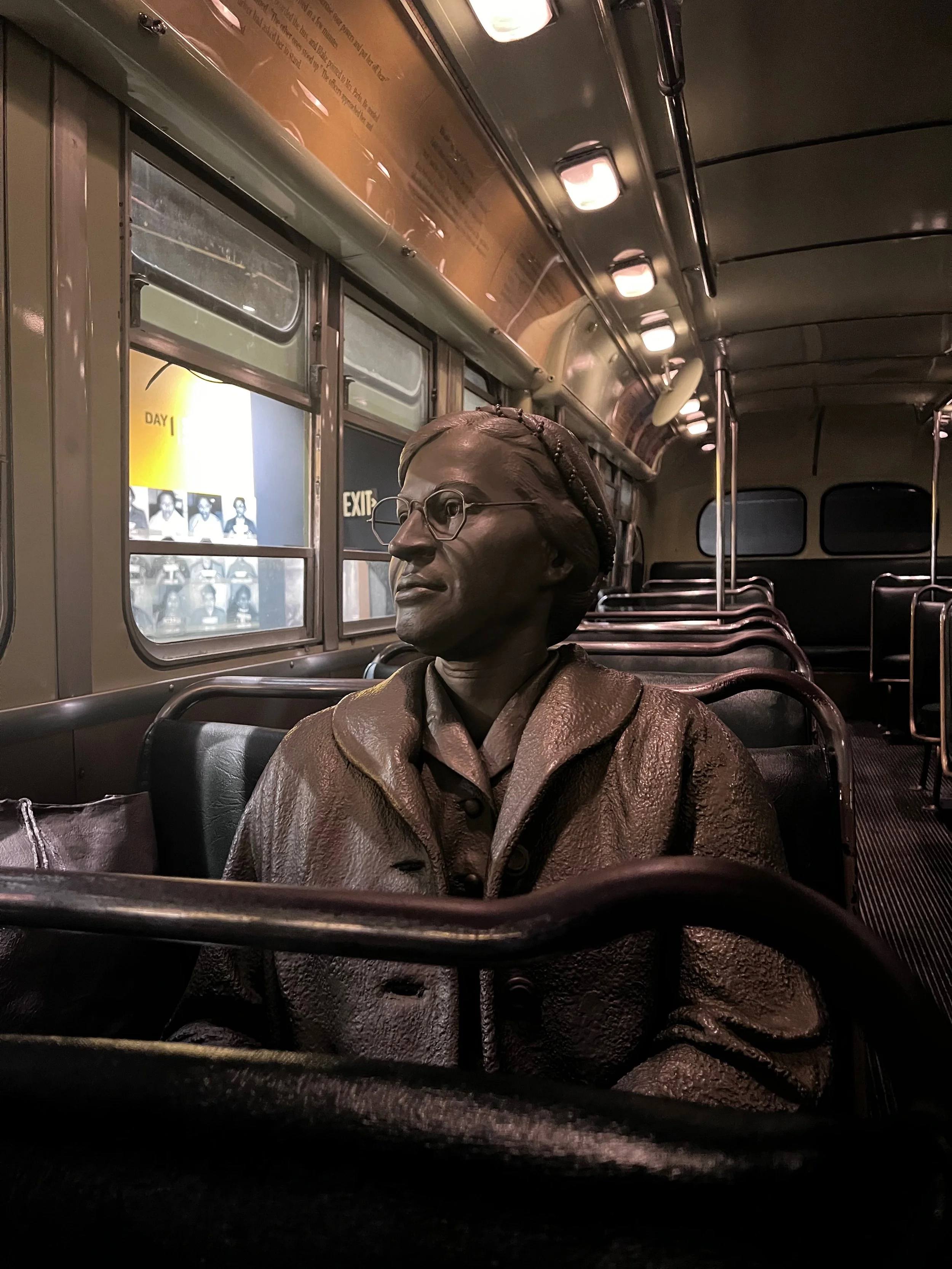
Rosa Parks, National Civil Rights Museum at the Lorraine Motel, Memphis, Tennessee
-
![]()
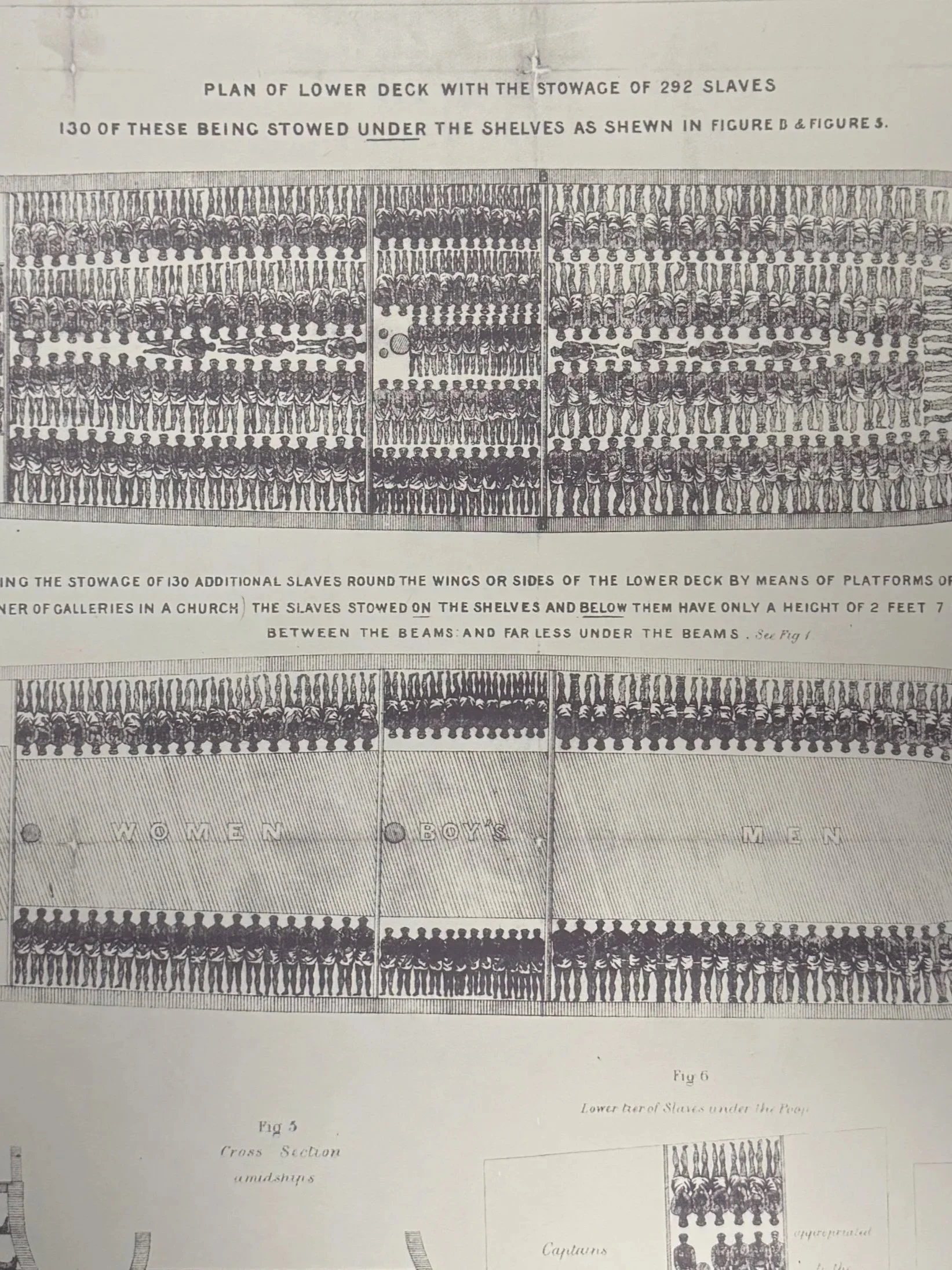
Slave Ship Rendering, National Underground Railroad Museum, Cincinnati, Ohio
-
![]()
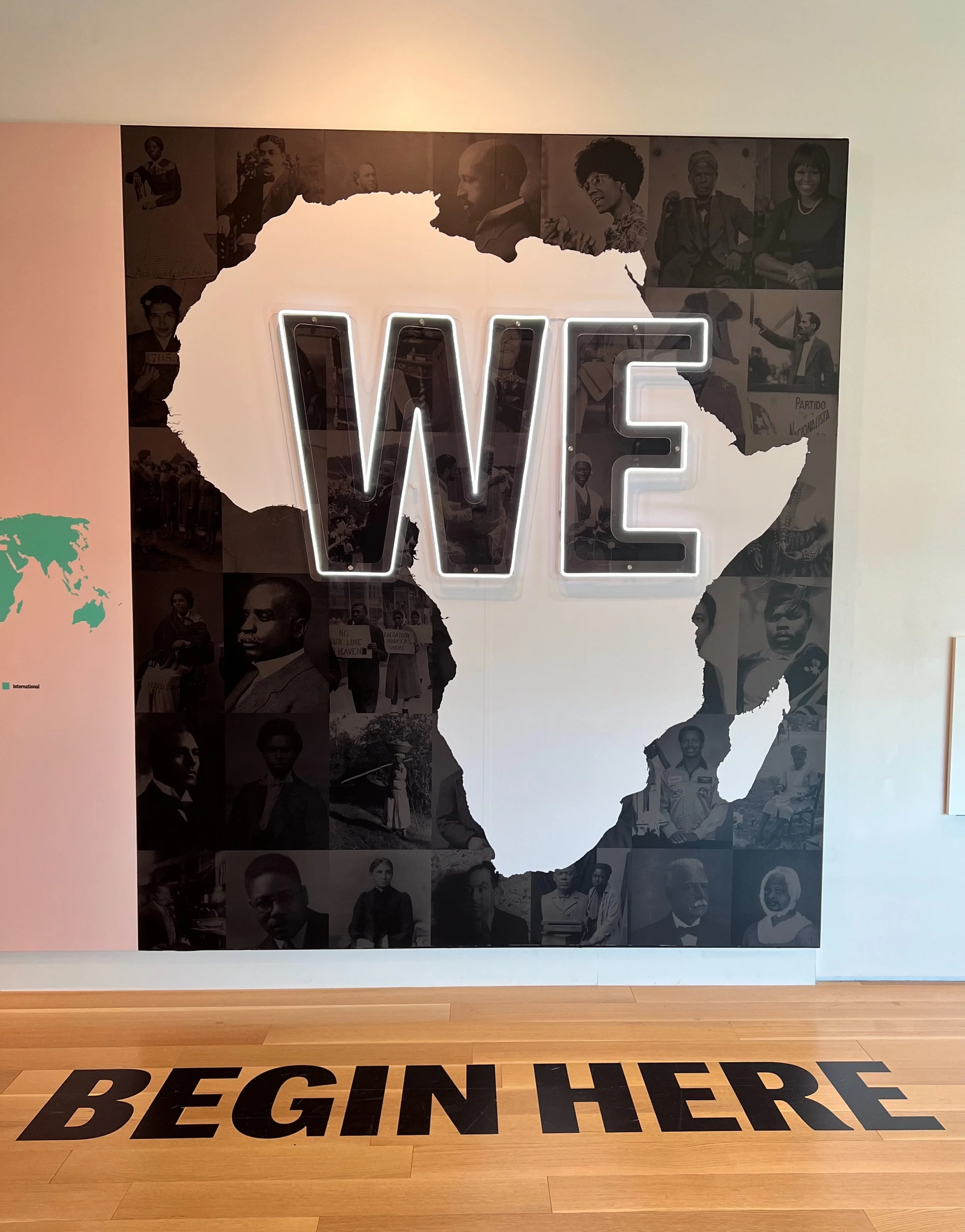
International African American Museum, Charleston, South Carolina
-
![]()
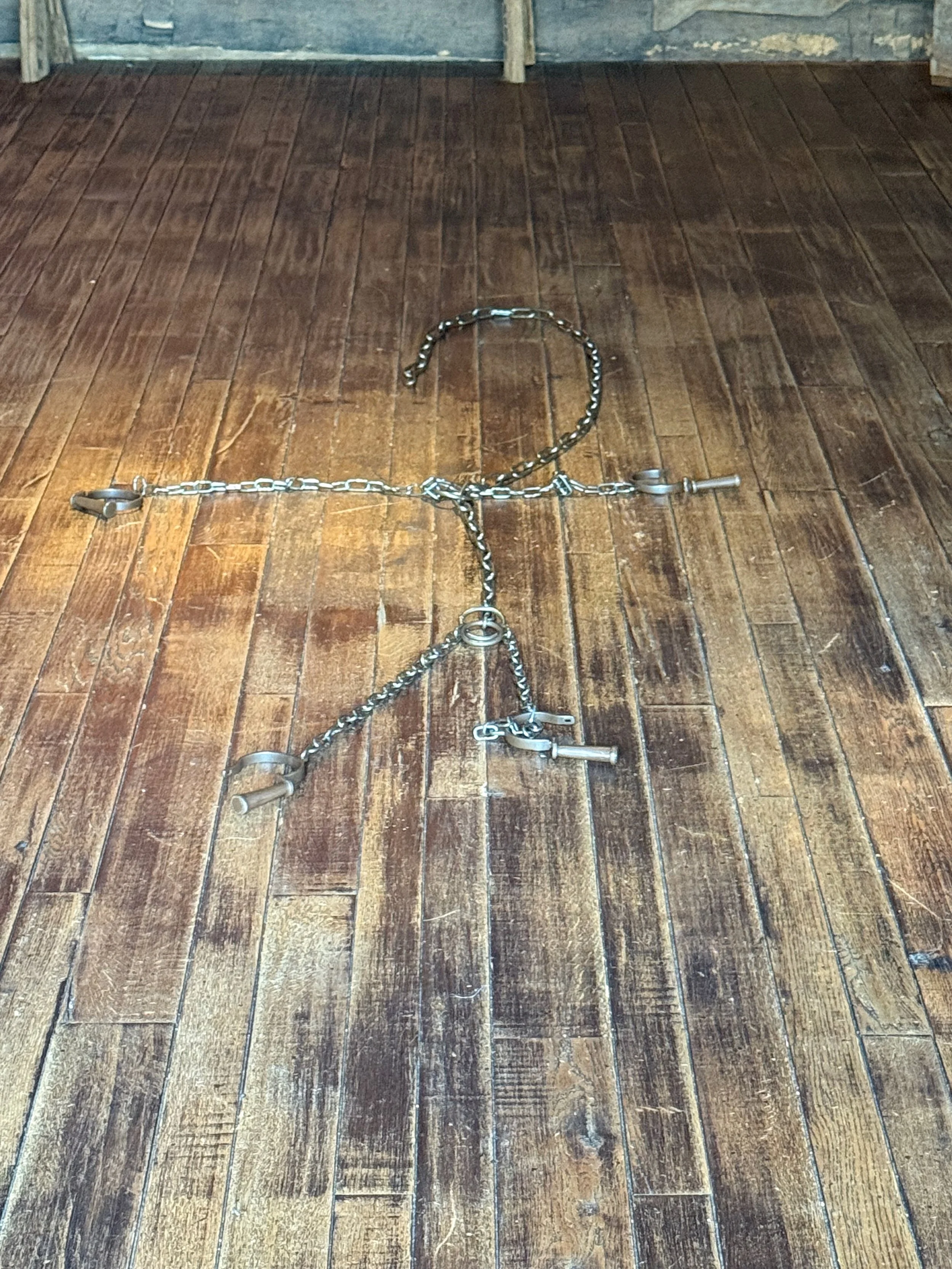
Shackles used in the transatlantic slave trade, National Underground Railroad Museum, Cincinnati, Ohio
-
![]()
Slave Auction Flyer, Old Slave Mart, Charleston, South Carolina
-
![]()
Edmund Pettus Bridge, Selma, Alabama
-
![]()
View from the Balcony, Lorraine Motel, National Civil Rights Museum at the Lorraine Motel, Memphis, Tennessee
-
![]()
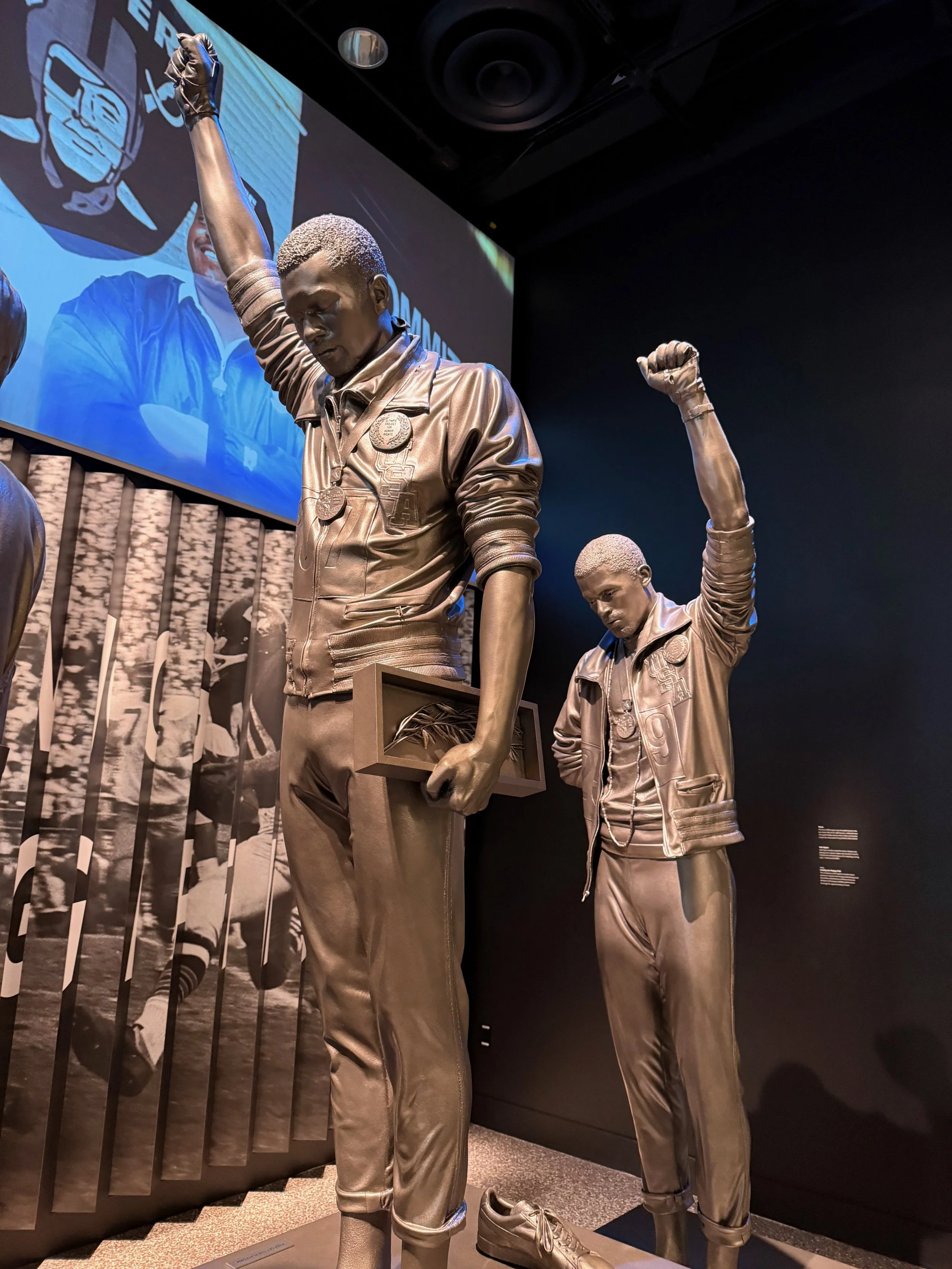
Black Power Salute, National Museum of African American History and Culture, Washington, D.C.
Buried in Plain Sight
Greenwood was not just a neighborhood in Tulsa. It was a thriving, self-sustaining Black community. A district so alive with success that it earned the nickname “Black Wall Street.” But that praise came filtered through a white lens—Black excellence measured against white benchmarks.
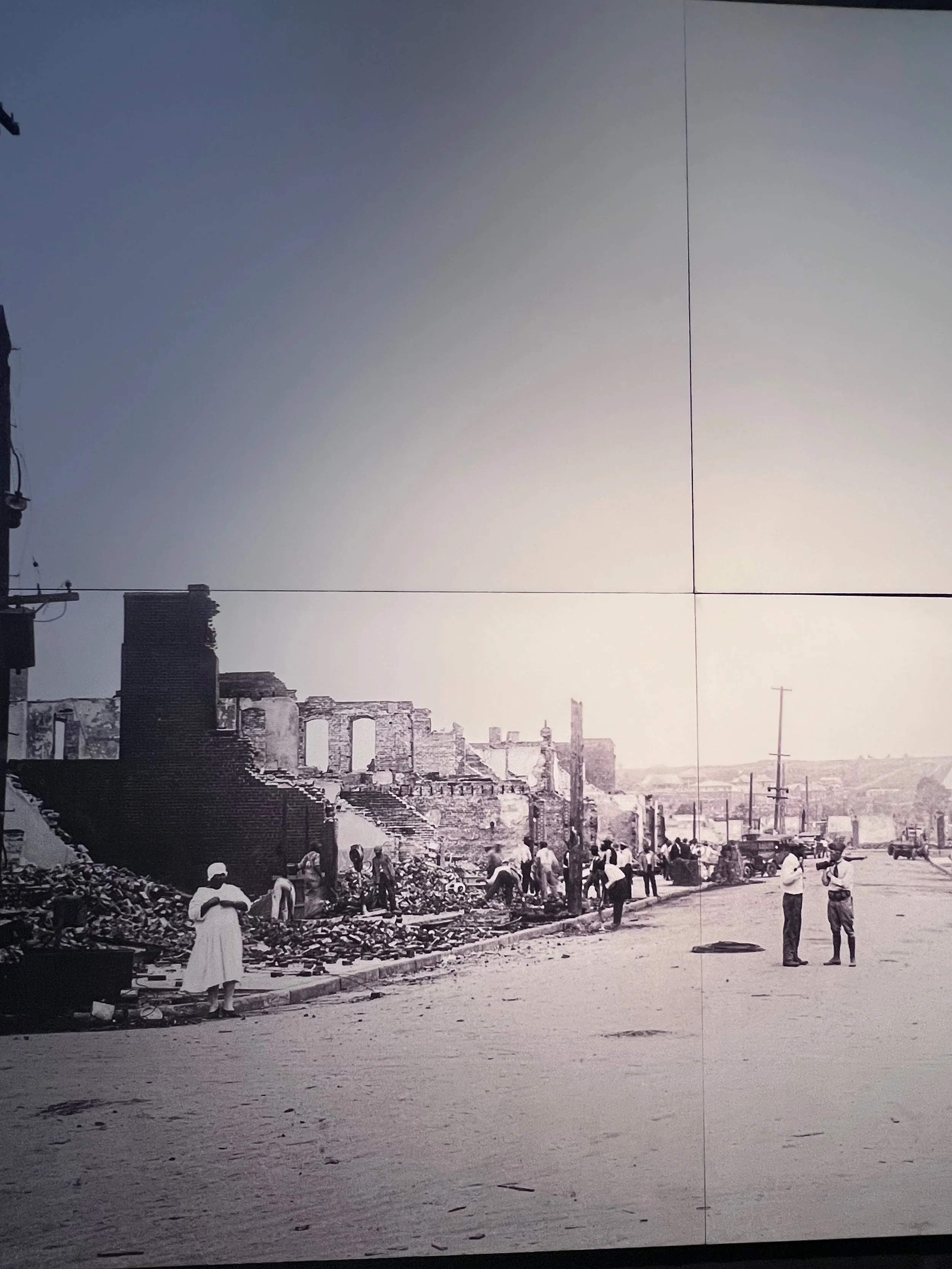
Then came May 31, 1921. A rumor. A familiar script. A young Black man, a young white woman, an accusation. The spark was not new, but the devastation was staggering. In less than 24 hours, 35 blocks were burned. Hundreds killed. Thousands detained. Homes and businesses were looted or destroyed. And for decades, silence.
To stand inside Greenwood Rising is to come face to face with the violence of erasure, not just of lives and property, but of memory itself. For much of the 20th century, the massacre was not taught in Tulsa schools and beyond. It wasn’t part of the public record. The story had been buried, not lost, but suppressed. Deliberately.
You walk through the museum and feel the weight of that silence. You see the faces. The fire. The aftermath. And you realize this wasn’t just about one city’s trauma, it was about America’s reflex to punish Black progress, then rewrite the story to protect its own myth.
What stayed with me most wasn’t just the scale of destruction. It was how fragile the truth becomes when no one fights to protect it. And how conscience doesn’t survive on memory alone—it needs tools. Museums like this. Communities like this.
-
![]()
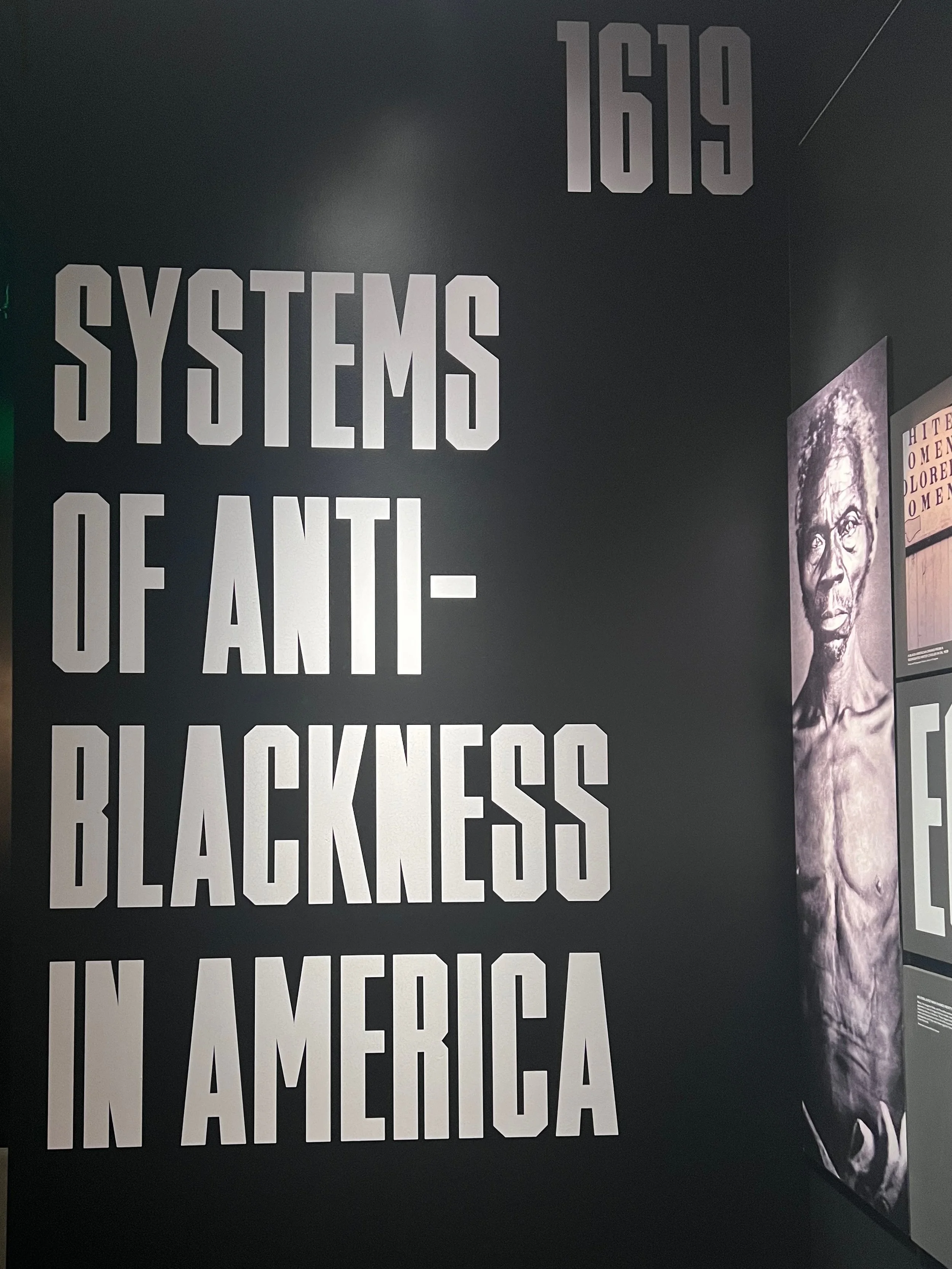
1619 Exhibit, Greenwood Rising, Tulsa, Oklahoma
-
![]()
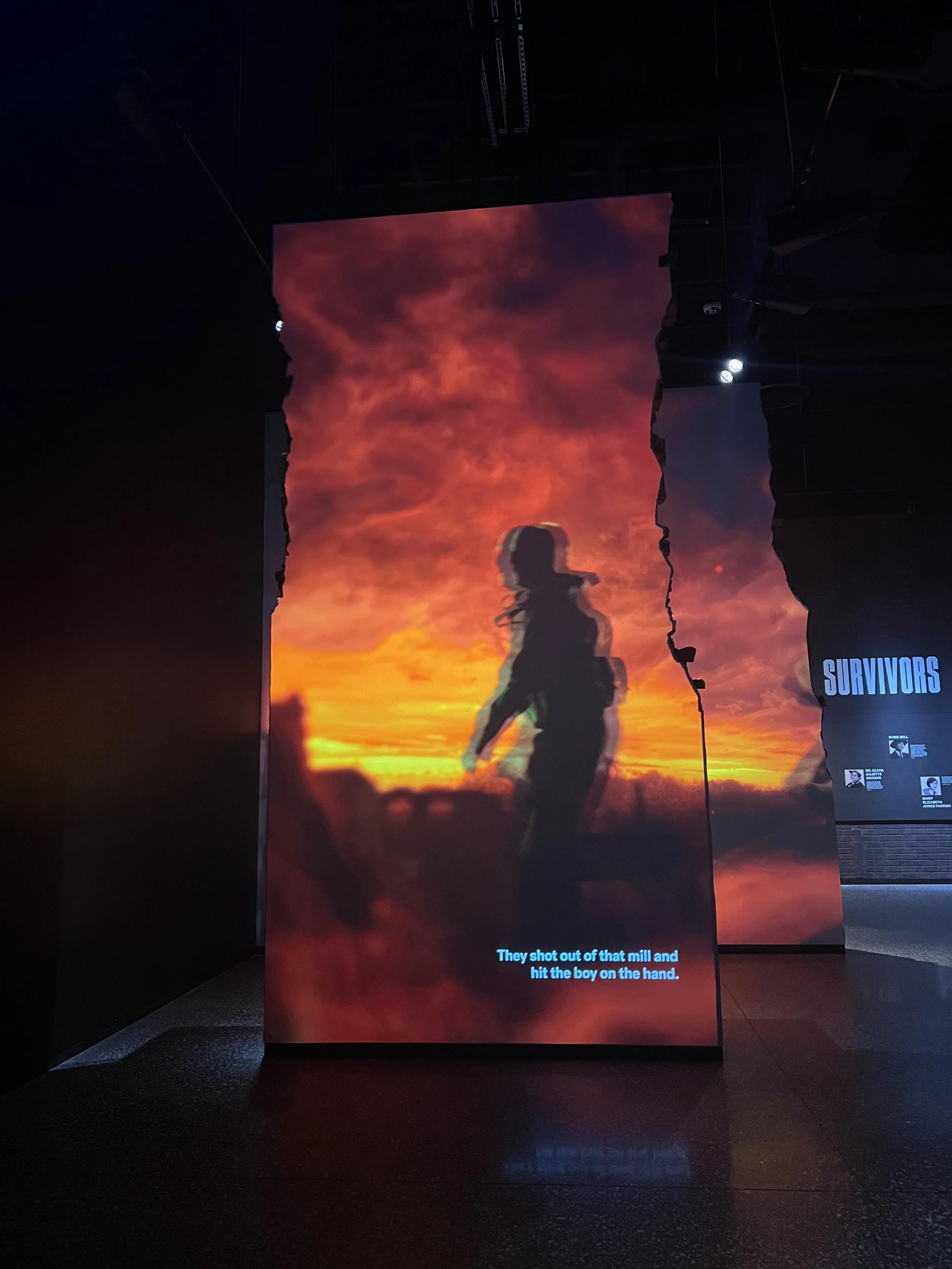
Multimedia Exhibit, Greenwood Rising, Tulsa, Oklahoma
-
![]()
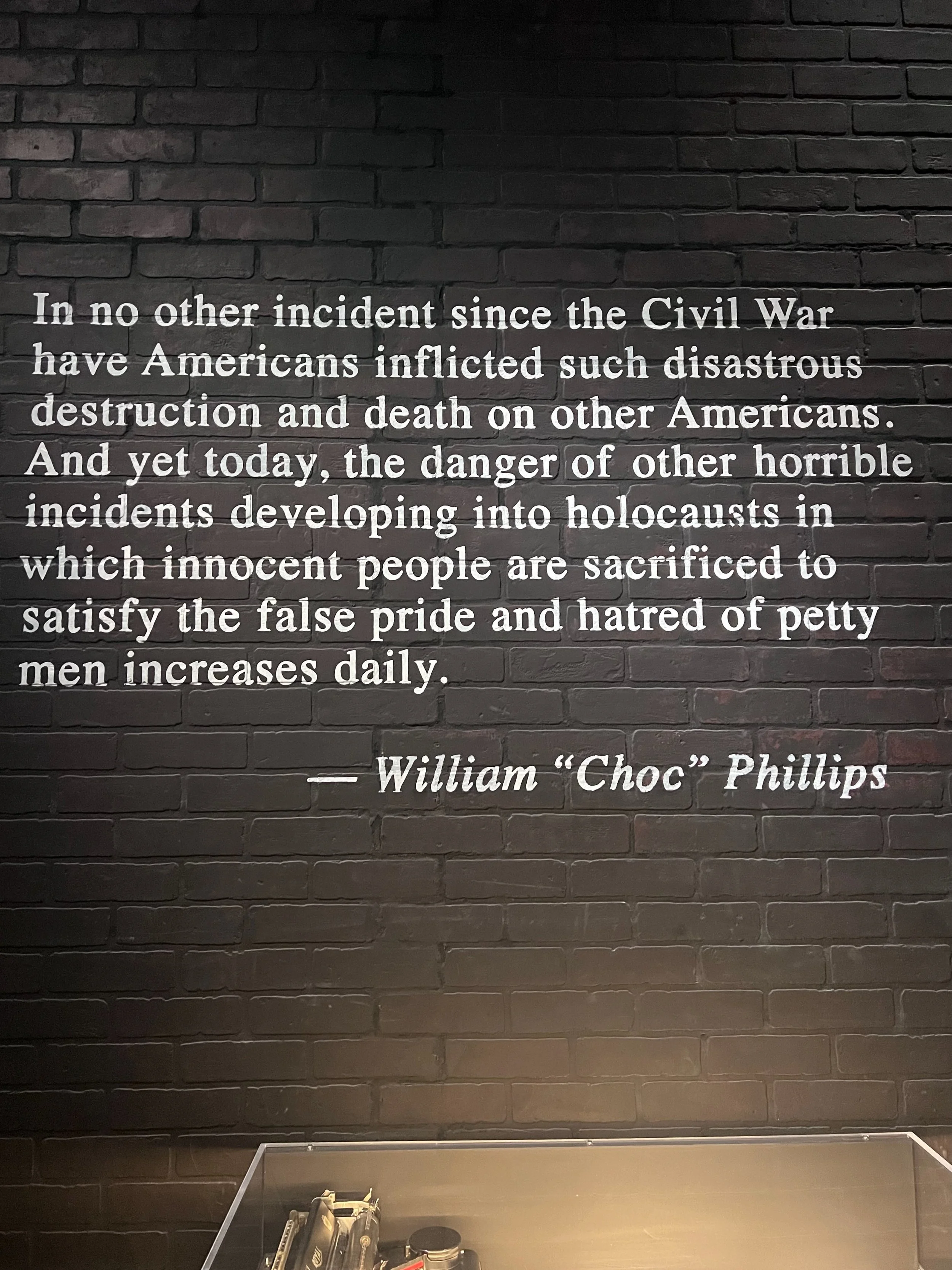
Exhibit, Greenwood Rising, Tulsa, Oklahoma
-
![]()
Photo Exhibit, Greenwood Rising, Tulsa, Oklahoma
-
![]()
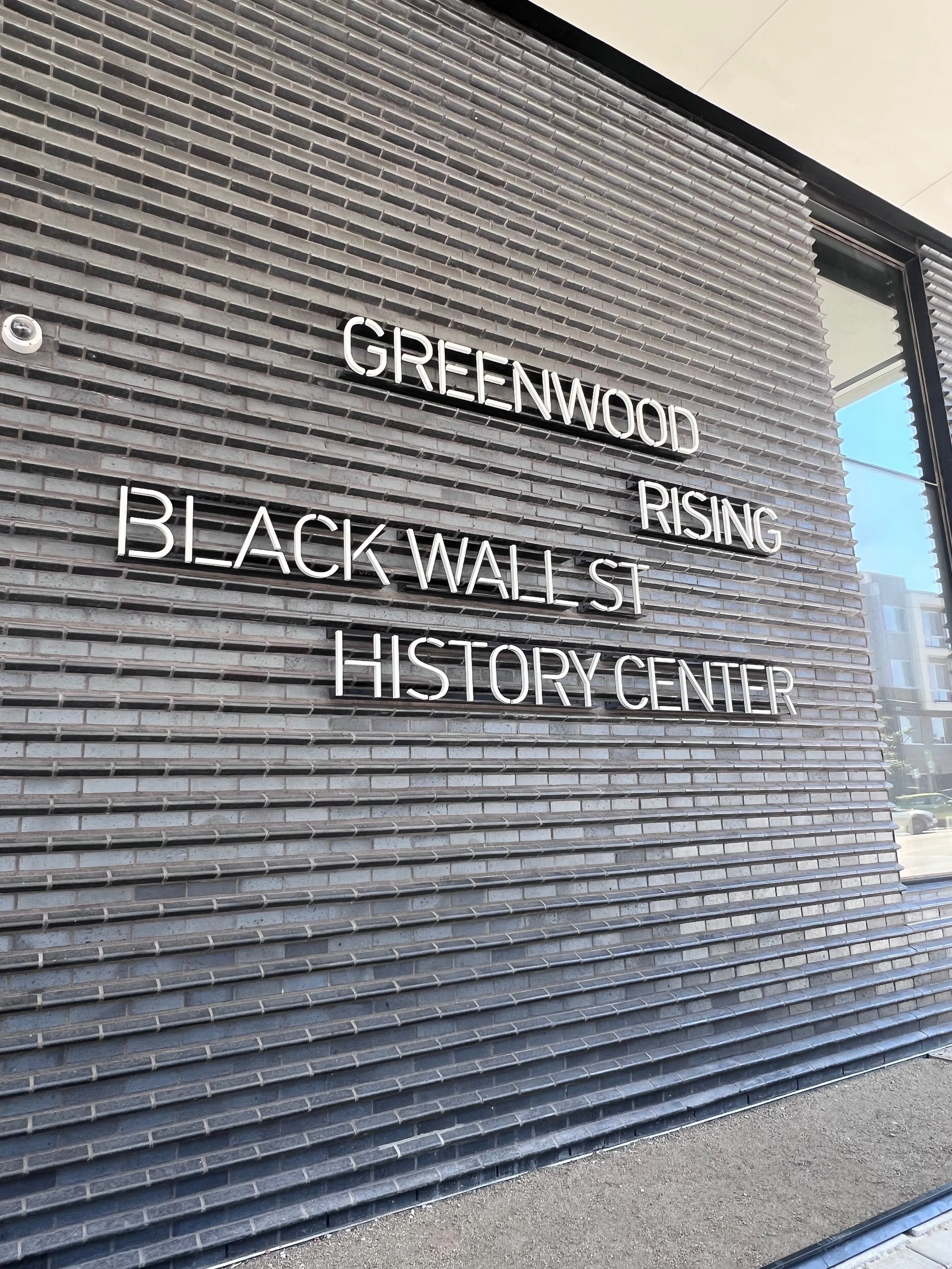
Greenwood Rising facade, Tulsa, Oklahoma
-
![]()
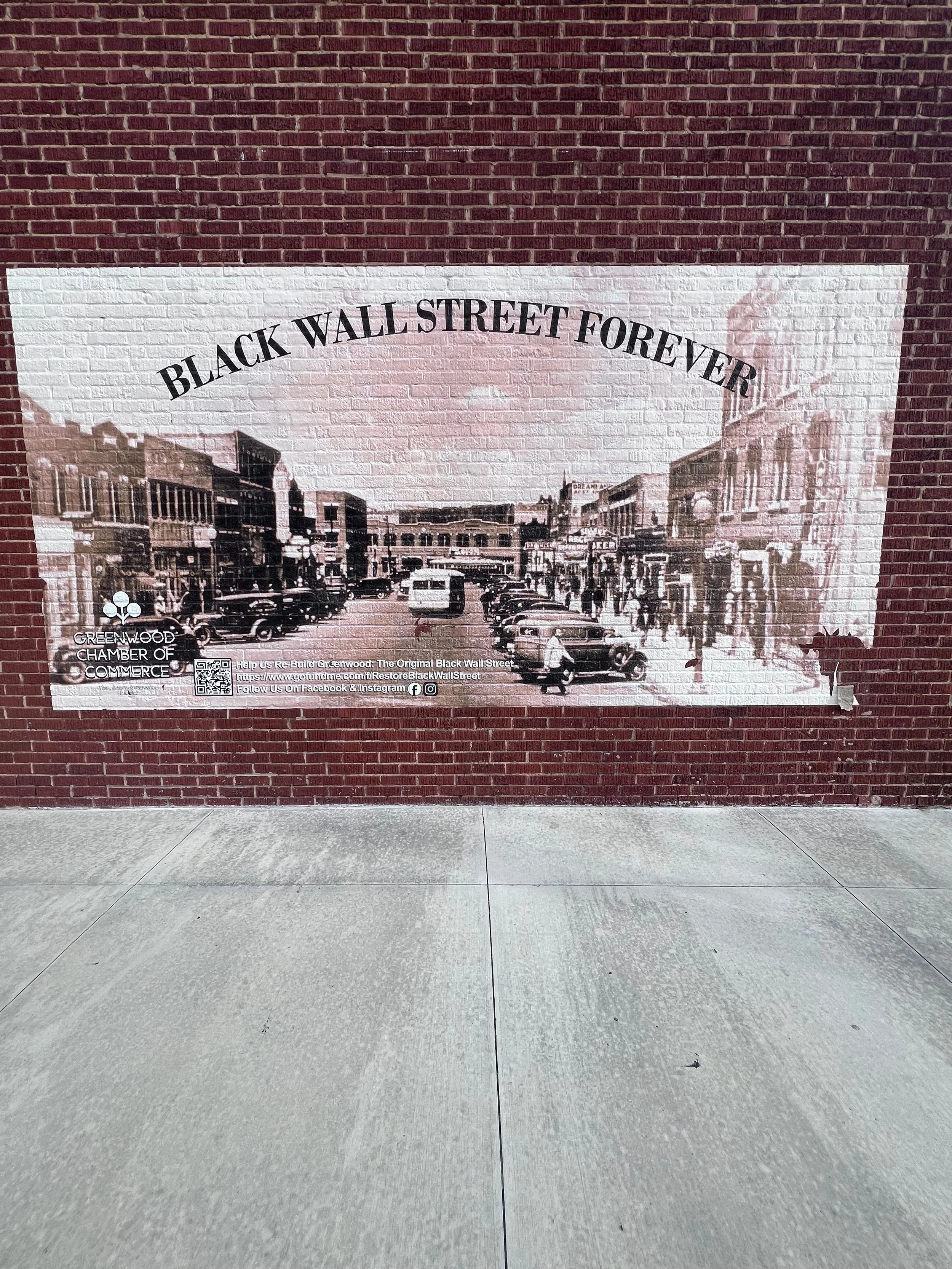
Black Wall Street Mural, Greenwood Avenue, Tulsa, Oklahoma