Right Now, I Live Here: A Case for Slow Travel
After 2.5 years living in 30 places, I’ve learned that slow travel isn’t about where you go—it’s about how you stay
I’m often asked, “But where do you actually live?” Many are confused or surprised when I respond, "Right now, I live here.” And since I’ve embraced slow travel for more than 2.5 years and lived in 30 communities across three continents, trust me, I get that question a lot. While I committed to a full-time travel approach where I live and work remotely, that doesn’t mean you cannot enjoy the benefits of slow travel. Nor do you need to pack up your house like I did. I also realize that living like a local or in someone else’s home for a month may not be for everyone, but I believe that trying it, even briefly, can open you up to a world of unexpected insights and rewards.
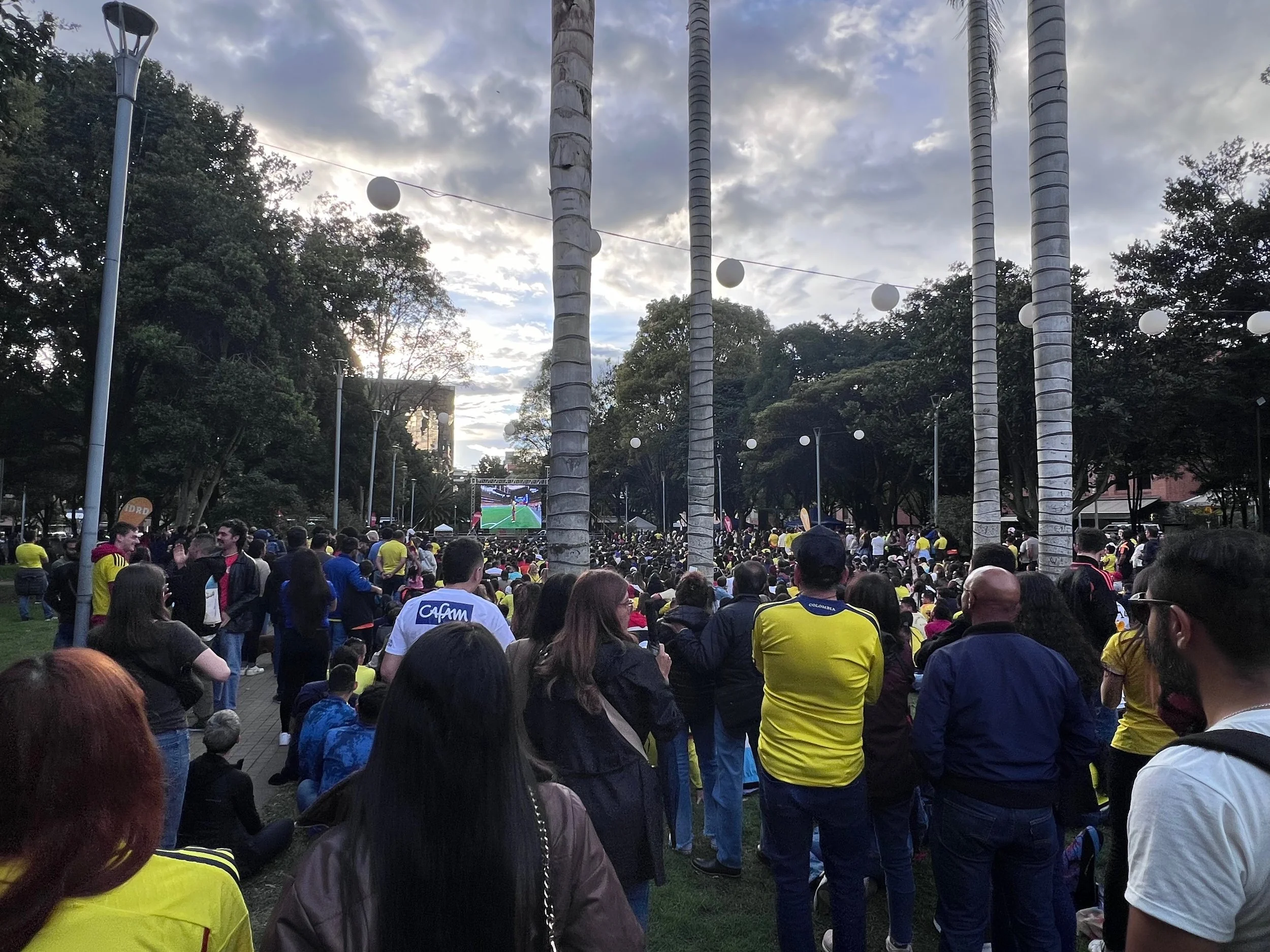
Parque 93, Bogotá (Michael Holland)
Of course, there are many forms of tourism, and all have their benefits. Whether it’s a traditional vacation, weekend getaway, family trip, or adventure travel, each has opportunities to relax and enjoy the time away. I have often seen U.S. colleagues take a week off in the summer or, if they are parents, structure a trip around a school holiday. Unless it is something unique or special, asking for two or more weeks off from work can be challenging. And over the years, I’ve heard everything from ‘This was exactly what I needed to recharge,” to “I need a vacation to recover from my vacation.” They also commented about the difficulty of fully breaking away from work, whether checking emails, joining a call, or using the day before they return to the office to clear out the inbox. European friends and colleagues take an entirely different approach and will often take most of or the entire month of August off, and additional breaks throughout the year.
What Is Slow Travel, and Why Is It Different?
For me, “Slow Travel” is a mindset. It is an intentional approach to making a temporary home in a place. In an era of Instagram-worthy destinations and bucket lists, slow travel emerges as a counterintuitive approach to exploring the world. Unlike traditional tourism's rushed itineraries and must-see attractions, slow travel embraces a more deliberate pace, encouraging travelers to immerse themselves in one location for extended periods. While this philosophy of unhurried exploration may seem at odds with modern travel habits, its principles offer a compelling alternative to the exhausting chase of tourist checkpoints.
Compared to traditional tourism, where an itinerary includes the top attractions in a few whirlwind days, slow travel is unhurried and spontaneous. It encourages you to look beyond the highlights and the snapshots most people collect when they visit a new place. You’re given the time to notice the daily ebb and flow of a city, the routines of its people, and the quieter aspects that come to light when you’re not rushing to the next stop. While it may not provide the “escape” that many vacations promise, slow travel offers something potentially richer: a chance to see a place as it truly is and even catch a glimpse of yourself in a new light.
The Key Benefits of Slow Travel
It’s easy to assume that slower travel means you’re missing out. But in many ways, it’s the opposite. What you gain from slowing down isn’t measured in landmarks or checked boxes—it’s measured in texture, depth, and memory. The benefits aren’t just about the places you visit; they’re about how you begin to see, feel, and even change in response to them. They build quietly, in small, repeated interactions and moments of surprise. The real magic is often in the ordinary. Here are some unexpected ways slow travel adds value to your life and the places you visit.
· Cultural Immersion: Slow travel allows you to truly absorb the rhythm of a place—its customs, quirks, and conversations. You experience culture as it’s lived, not packaged. Over time, you start to understand not just what people do, but why. When I was in San José, the morning rush was earlier than most American cities, so I would be up and out of my apartment between 5:00 and 5:30 AM to participate in this daily ritual. I didn’t need to get to work per se, but I wanted to move with the city, to feel its pulse, to share in that common purpose, even if mine was just to observe. I know this may sound odd or silly, but when you are a solo traveler, finding these little ways to feel included helps you adjust to life in a new city.
· Authentic Local Experiences: You find the stories that aren’t on the brochures—tiny family-run cafés, market stalls with no English menus, or conversations with locals who’ve lived in the same neighborhood for decades. These moments shape your understanding far more than a guided tour ever could. I was fortunate to live in Bogotá during the 2024 Copa América, and the intensity of the support across the city was simply exhilarating. The watch parties in Parque 93 were something that I had never experienced; hundreds, and at times it felt like thousands, of fans packed the park to watch the game together. Standing in the crowd, you felt every pass, every shot, every save during the tournament when the Colombian national team played.
· Mental Health Benefits: There’s something restorative about not rushing. Without the pressure to fit everything in, your mind has space to rest and wander. You begin to experience the place and yourself with more clarity and calm. You can return the next day if a museum is closed or busy. And in my case, if you don’t check if the museum is open on Tuesdays like The Art Institute of Chicago, you can always come back! More importantly, I’ve found that something as simple as an afternoon walk in a park is more relaxing because these moments have become ingrained in my lifestyle, not an add-on to the itinerary.
· Environmental Impact: Fewer flights, less long-distance transport, and a focus on walking or public transit can significantly reduce your travel footprint. I’ve come to rely upon both, with the occasional use of rideshares for late nights. And by walking constantly, you begin to get a feel for the location and see many things you might miss while driving.
· Financial Efficiency (Over Time): While longer stays can seem costly upfront, slow travelers often spend more efficiently. Weekly or monthly rentals are cheaper per night. You cook more. You stop buying “experiences” and start living them. Yes, I still go to restaurants occasionally, but not relying upon them for every meal allows me to save money and create a sense of home.
· Personal Growth and Adaptability: Being in one place long enough to feel out of place, then learning how to navigate it, that’s where real growth happens. You adapt. You problem-solve. You become more patient, open, and curious. Those are skills you take home. When I started out, I could never imagine how much I would change or grow. Honestly, I’m unsure if I knew back in 2022 how long I would even do this. But staying in a location for an extended period of time changes you in ways you won’t expect. More on this below.
Barriers to Slow Travel
But the things that make slow travel enriching are also what make it challenging. There are good reasons why most people default to quick weekend getaways or traditional vacations. Jobs, families, and even our habits and routines can make the idea of spending weeks in one place feel out of reach. Before I go too far in romanticizing this lifestyle, it’s worth looking at the practical limitations that keep most travelers moving fast. Some are systemic, some personal—but all of them are real.
· Time Constraints: The reality of limited vacation days presents a significant barrier for many potential slow travelers. With the average American worker receiving only 10 paid vacation days annually, the luxury of spending weeks in a single location feels impractical when there's a world of destinations to explore.
· Career Limitations: Many professionals find themselves constrained by workplace demands and project deadlines, even if they are working remotely. The extended absences from the office that slow travel often requires can impact career advancement opportunities and professional relationships, making it a challenging choice for career-focused individuals
· Family Obligations: Family responsibilities, from childcare to elderly parent care, often make prolonged travel impractical. School schedules, family commitments, and the complexities of coordinating extended absences can render slow travel an unrealistic option for many households.
· Traditional Tourism Benefits: Traditional tourism isn't without merit. I get it. I’ve taken those trips too—short, busy, full of quick beauty. There’s nothing wrong with that. Sometimes, speed is all we have. The ability to experience multiple destinations in a limited timeframe allows travelers to sample diverse cultures, landscapes, and experiences. For some, this broader exposure better suits their travel goals and personal preferences.
Why Slow Travel Can Feel Uncomfortable and Why That’s Part of Its Value
Let’s not sugarcoat it: Slow travel can be awkward or disorienting when starting, especially when you are more accustomed to weekend or one-week vacations. To spend up to a month or more in one location can be jarring. And, yes, it can be occasionally lonely. To combat loneliness, I build in daily rituals that create opportunities for familiarity. When I was in Dayton, I would go to Bigsby Coffee each morning, and over time, the staff remembered me and my order. And I will also pick locations where family and friends are, so I have more opportunities to spend time with them than I would normally have.
Importantly, you’re not just sightseeing—you’re building a version of your life in a place where everything is unfamiliar. Grocery shopping becomes a puzzle. Ordering dinner might involve wild guesses. Even silence can feel louder when you’re a stranger somewhere. But here’s the thing: while discomfort is part of the deal, it’s where the magic happens. Struggling to do simple things rewires you. You learn patience, humility, and how to laugh at yourself. There’s something quietly radical about being a little lost and realizing… you’re okay. You figure things out. You adapt. And that adaptation changes you more than any landmark ever could. Slow travel doesn’t just show you the world—it shows you your world, reframed. When you live by another culture’s rhythms, your habits and assumptions start to differ. You start to learn and unlearn.
Final Reflection: Is It Worth It?
Slow travel may not be ideal for everyone, and I don’t believe it should be. But for those who can try it, even once, it leaves something behind that lasts longer than a photo album. It’s not about becoming someone else; it’s about discovering parts of yourself that only surface when life slows down. You might find clarity in the quiet. You might become more curious, resilient, and at ease with the unknown. You might even come home a little changed, with a new rhythm and way of seeing. It doesn’t have to be forever. It doesn’t have to be far. But something real happens when you let a place shape you instead of trying to conquer it.
You don’t have to move. You don’t have to quit your job. But if you’re willing to pause in one place, to let a city meet you halfway, you might just feel what I did: that here, wherever that is, is enough for now.
Originally published on Substack on May 6, 2025.
